
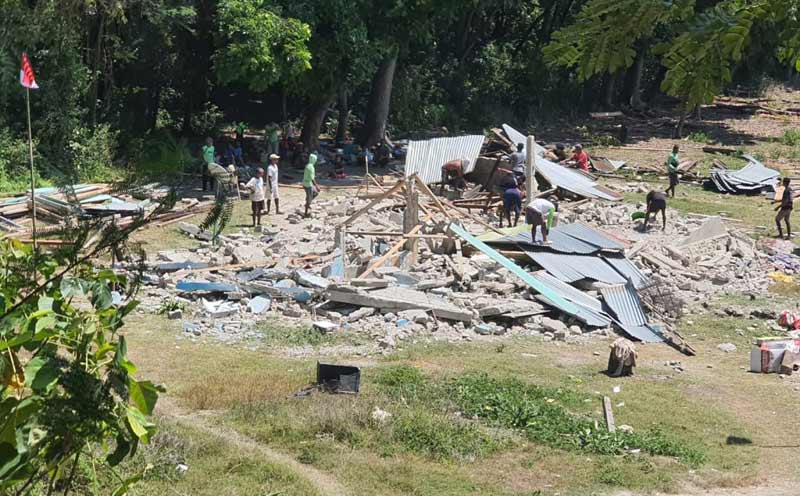
As of Sunday (August 16), markets, shopping centers, and medical services in the district were paralyzed. Many affected residents have suffered minor, moderate, and even severe injuries that “have not been treated due to the limited supply of medicines and medical equipment we brought with us,” said Fifin.
First Aid
Most injuries occurred when people fell while trying to escape to safety. The majority of the injured were women who panicked during the initial earthquake, leading to slips and falls.
UMY’s Community Service (KKN) students provided wound care using first aid kits brought to the site. This response was supported by emergency preparedness training from the university and the presence of an internal health division within each student group.
In addition to emergency medical care, the students shared their personal rice supplies to provide meals for residents at the evacuation sites.
Logistical aid from the local government and the Regional Disaster Management Agency (BPBD) had not yet arrived at the location, while village officials were still coordinating with local authorities.
Independent Evacuation and Logistics Crisis
The disruption of shopping centers made it difficult for the community to obtain food and clean water. Residents in the coastal area of Pota Village and its surroundings have evacuated and set up tents independently near the UMY KKN command post.